At TSA Middle School, we believe students learn best when subjects are connected, learning is personalized, and curiosity is encouraged. Our Integrated Curriculum is a dynamic two-year cycle (Year A and Year B) that blends Language Arts, Science, Social Studies, and Art into thematic, interdisciplinary units. Students in grades 7 and 8 are grouped together in multi-age classrooms that foster mentorship, leadership, and a strong sense of community.
The curriculum is anchored by essential questions:
- Who am I?’
- What do I believe?
- What are my responsibilities?
- How can I make a difference?
These questions guide students through real-world themes that help them explore identity, personal responsibility, and social action. Students develop critical thinking, collaboration, creative problem-solving, and strong written and verbal communication. Reading, writing, research, and public speaking are emphasized throughout the two years.
Themes and Explorations
Year A: Themes & Exploration
Human Rights
Students examine the rights and protections afforded U.S. citizens through our government’s structure and foundational documents; they learn how genetics explains why twins can have different skin color; and they read literature centering black characters to examine justice and prejudice.
Food and Hunger
Students research food justice issues and policies in the U.S. and globally. In Science, they investigate nutrition, digestion, and metabolic diseases. They explore food and culture through creative writing and build ceramic model meals in Art. For the capstone project integrated unit, students take a deep dive into a topic of their choosing related to food production, food justice, or food insecurity and write an article that is compiled into the Food & Hunger newsletter, which is published and distributed in our community.
Energy and Sustainability
Students investigate the Industrial Revolution and analyze modern energy use. They explore how electricity is generated and compete to design and build the most effective wind turbine. Through science fiction literature, students envision how energy and power will shape our planet’s future, and in an argumentative essay, they use evidence to advocate for alternative energy sources.
The PLP is an ongoing portfolio of activities that will help students reflect on personal and academic interests, goals, strengths and challenges. The PLP is also a portfolio of students’ academic work. Students work on their PLPs in Study All and Advisory and share their progress with their families at conferences.
Year B: Themes & Exploration
Living in Vermont
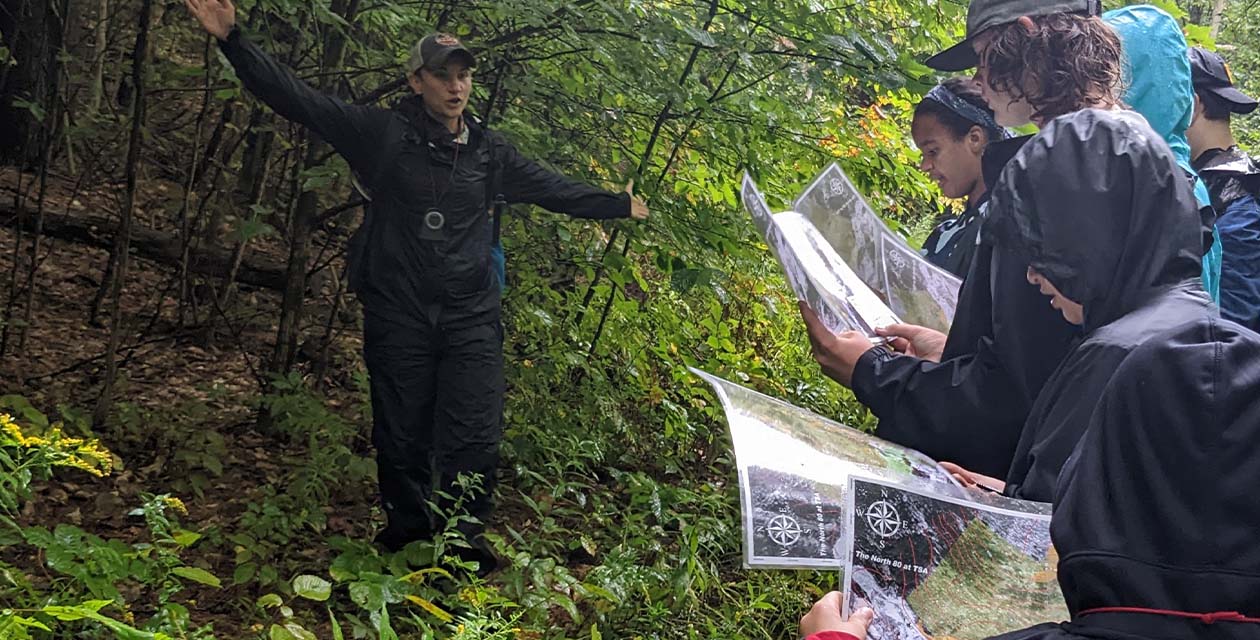
Students explore Vermont history and geography. Through observation, research, and data analysis, they learn the ecological significance of individual tree species and of Vermont’s forests. In 2025, students read Gather and write their own memoir to explore how place shapes identity. Inspired by Andy Goldsworthy, students create sculptures out of natural materials. Students put their map-reading and tree identification skills to the test on our all-school hike up Mount Cardigan.
Belief Systems
Students learn about the Abrahamic religions and then research a less common religion of their choosing, developing a thesis and honing their expository writing skills. ; They read Night and write personal belief essays. A study of astronomy and chemistry gives a new angle to the age-old questions: Where did we come from? What are we made of? How do we know what we know?
Immigration
Social Studies focuses on immigration trends and policy debates. Students analyze political cartoons and engage in structured debates. In Science, students study matter, chemistry, and origins of the universe. The unit culminates with students addressing the question: Who am I?
Math at TSA Middle School
Students are grouped by readiness, not age, and can move between skill levels throughout the year. All classes are taught concurrently so that placement doesn’t dictate other class placements.
Foundations:
We have a math foundations course for students who need to bolster their elementary knowledge and strengthen their basic skills..
Pre-Algebra:
We offer two sections of Pre-Algebra, both covering similar content but at different paces. Students in the slower-paced course may take a second year before advancing to Algebra 1, while those in the faster-paced section typically move on to Algebra 1 the following year. The primary differences are pacing and depth.
Algebra I:
In this course, students move from concrete principles to a more advanced mathematical literacy that is foundational to future math and science courses. This course mirrors high school coursework and requires more homework completion than the other math classes. Students who master the standards of Algebra 1 to Geometry or Algebra 2 the following year.
Advanced Options:
Geometry or Algebra II for students who’ve completed Algebra I.
Spanish at TSA Middle School
The class introduces students to basic grammar, vocabulary, and a survey of Spanish-speaking cultures and history. Students practice speaking, listening, writing, and reading. After two years of middle school Spanish, students are eligible to enter Spanish 2 in high school.
Arts at TSA Middle School
Art projects are closely coordinated with the core themes in Year A and B. Students are exposed to a wide variety of media and techniques. Each student is encouraged to develop their own creativity through experimentation and risk-taking. Whether it is ceramics, block prints, watercolor or sculpture, students explore their own values, interests, and the world around them through art.
Signature Programs TSA Middle School
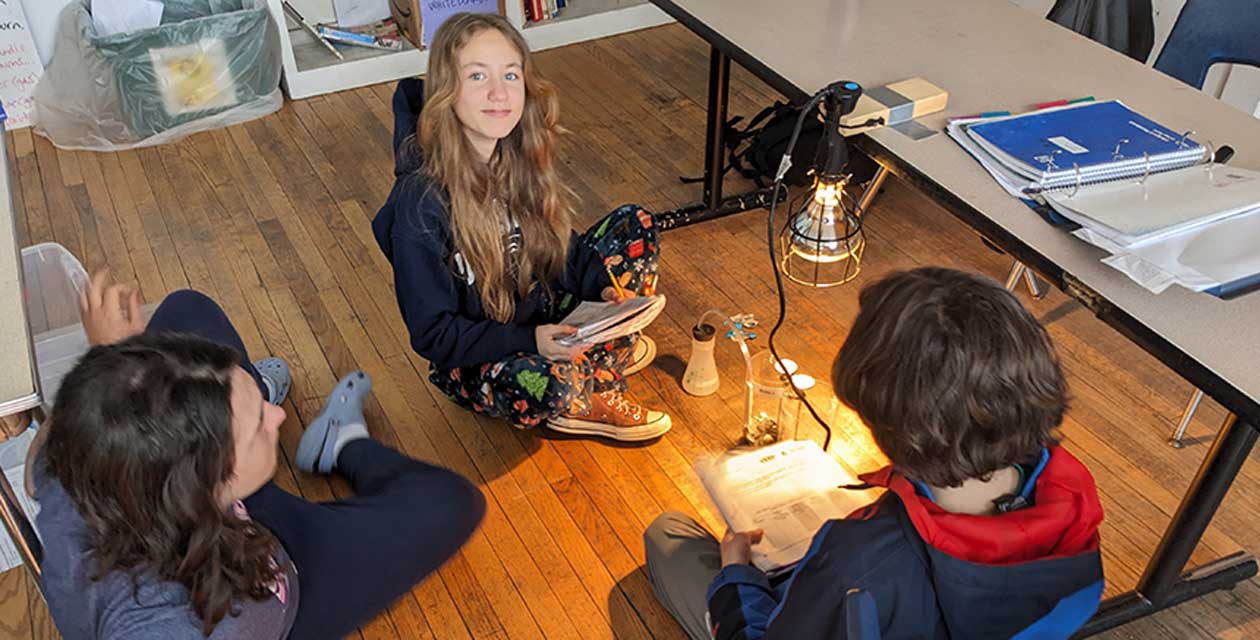
Every year, students spend six weeks designing and conducting experiments culminating in our Science Fair. Students work with our science teacher to develop their own scientific question and carry out the experiments. Students hold a public poster session with their results in June, where students give in-depth descriptions of their research to the public.
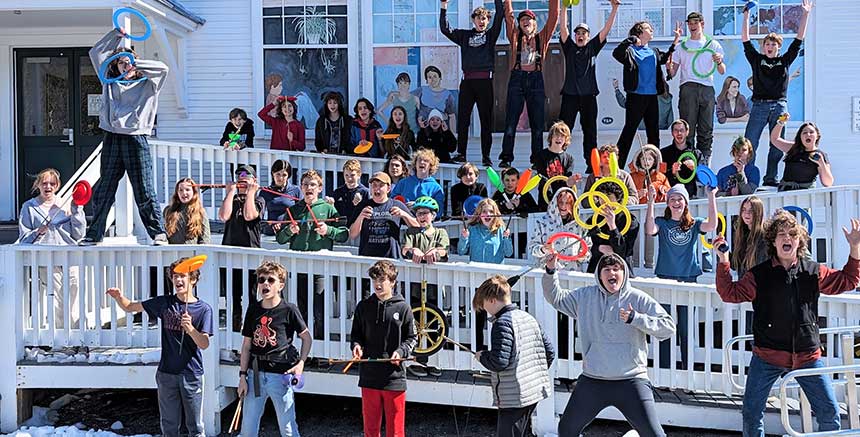
A two-week interdisciplinary program where students learn circus skills, craft sets and props, perform music, and work collaboratively toward a live performance attended by over 600 community members.
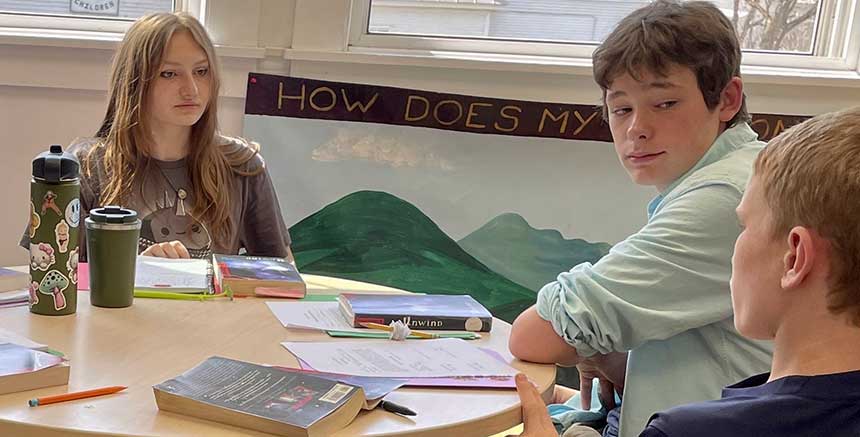
Held twice a week, Study All helps students develop their organizational skills, study habits, mental health and wellness strategies, presentation skills, and time management. The class also addresses content such as: bullying, online safety, sex education, and drugs and alcohol education.
Beyond the Curriculum
Personalized Learning Plans (PLP)
The PLP is an ongoing portfolio of activities that will help students reflect on personal and academic interests, goals, strengths and challenges. The PLP is also a portfolio of students’ academic work. Students work on their PLPs in Study All and Advisory and share their progress with their families at conferences.
Community Meetings
Students meet each week to build relationships and belonging through games and other cooperative activities, plan community events, and resolve conflicts and issues.
Advisory
Advisory establishes and strengthens each students’ personal connection to their advisor, and their sense of belonging to the mini-community of their advisory group, and the greater community of the school. A student’s advisor provides big-picture academic coaching that can increase student ownership of academics; the advisor acts as a whole-student advocate and family liaison.
Emotional, Social & Physical Class (ESP)
This class provides opportunity for movement, mindfulness, and wellness through activities such as fitness exercises, active indoor/outdoor games, yoga, archery, goal-setting, and team-building.
